Journal #9: Sarah Orne Jewett
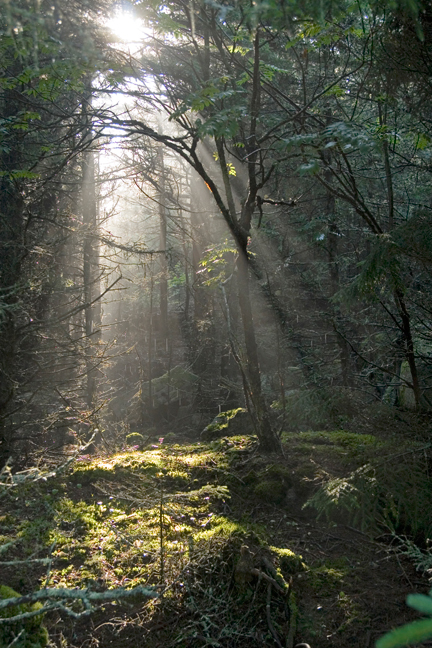
"... Sylvia still watched the young man with loving admiration. She had never seen anybody so charming and delightful; the woman's heart, asleep in the child, was vaguely thrilled by a dream of love. Some premonition of that great power stirred and swayed these young creatures who traversed the solemn woodlands with soft-footed silent care."
This passage struck me the first time I read Jewett's story, A White Heron, but not in the thought-provoking manner in which it has struck me since discussing it in class. What I love so much about the story is the imagery that takes me back to my own childhood. The girl in the story is 8 or 9 years old, and that age, for me, holds some of the fondest and most innocent memories I can think of. Upon first reading, I highlighted the quote above merely for the beauty of it. I loved the crush Sylvia had formed for this man, and imagined that she must be fantasizing about an adult union with him, the way a young girl may do. It was especially endearing because of her portrayal of being a tomboy... It made this instance less typical, I suppose.
After discussing the quote in class, I realized how much weight it carries. It could be looked upon from many avenues of criticism, particularly the question of whether the story is in fact a love story, as it has been disputed. Is it a story about the love between the young girl and the hunter? Is it a story about the love between the girl and Nature? In the end, Sylvia's infatuation with wildlife wins out over her crush on the young man... Is it a story about that rivalry, and a symbol of conformity and typical gender expectations vs. the "back to basics" lifestyle that the girl and her grandmother are living in the the country? Perhaps it is in part all of these, or just the latter. I think it is a portrayal of one small, secret victory over the growing industrialization and capitalism of the time.
By telling a coming-of-age story about a young girl who is much happier in the country than she was in the city, Jewett perhaps expresses her own rejection of capitalism and the "rape" of the land. She mentions the tall tree, which is the last of its kind in those woods, and a symbol of the unfortunate loss of all the others... Jewett exhibits her respect for nature as she personifies the tree as Sylvia climbs it. She personifies many other things, such as the cow, Mistress Moolly, who is Sylvia's closest friend.

The cow might help represent yet another existing theme in A White Heron, which is that of the feminist. The young girl lives in the country with her female grandmother, an independent female cow, and a cat who takes care of itself quite well by hunting robins (I tend to think the symbol of the cat is female, whereas maybe a dog would've been more of a male example, stereotypically). The household is female and thriving just fine as it is, contrary to what may have been expected at the time. And even though this man comes along and interrupts their quaint little lifestyle, tempting them to take payment for telling where to find the Heron, in the end, Sylvia finds that there is more satisfaction in protecting the Heron, and protecting the nature she loves.
Getting back to the quote I have chosen, it raises also the question of sexuality, and although I originally said "But she's only 8 years old," it's reasonable to say that she likely had deeper fantasies about the young man. She was, after all, quite close to puberty. The story could then be one about the threshold between the girl and the young woman, and the inner struggle between the two. Here is this young, wild girl who loves nature, but begins to have womanly feelings toward a strange man... yet in the end, decides not to sell out her beloved creatures. In a sense, the girl beat out the fantasies of the woman, and the reader applauds this.
posted by Tara Taylor at 10:11 AM


1 Comments:
20 points. "The story could then be one about the threshold between the girl and the young woman." Agreed!
Post a Comment
<< Home