Monday, December 07, 2009

First Americans 2: Red Jacket, etc.


"We also have a religion, which was given to our forefathers, and has been handed down to us their children... It teaches us to be thankful for all the favors we receive; to love each other, and to be united. We never quarrel about religion."

The Seneca orator known as Red Jacket, or Sagoyewatha, in a speech to the U.S. Senate (in 1805, I believe), does his best to demonstrate that the Natives should be free to worship peacefully as they please, and that just because the white men believe in a particular religion, it doesn't mean the way the Natives choose to worship and believe is wrong.

Although this section of the Norton had more than just one orator, the speech of Red Jacket stands out for a few reasons. The most simple reason being that the dilemma of supposed religious people forcing their beliefs upon people who believe differently is still alive today, and it just seems so ridiculously absurd. Wars have been are fought, and are still fought, based on nothing other than religion... RELIGION! Which is supposed to make people better for having it, is the CAUSE of war? I don't get it. Why isn't it okay for one person to submit to a certain set of ideals, and be okay with someone else submitting to his own?

Why can't one choose to disagree with something like gay marriage, but if someone else so chooses to believe in it, let it be? Why is this a problem for you when it has nothing to do with you? WHY is it NOT okay for me to disagree with you?
Of course, Red Jacket wasn't fighting for the right for gays to marry, but here they were... the Natives... living rather peacefully on their Native soil, and then these foreigners come from another land, and they need help. The Natives help them and take them in, just as good religious people might do. But then the foreigners turn on the Natives, and begin to mistreat them... AND tell them that their traditional beliefs are wrong, and that they must convert.

PEOPLE STILL DO THIS! What gives them the right or the audacity? How can anyone practice such self-importance? Let me believe in what I wish... and leave it out of government.

This may be a rather elementary view... and not so balck and white. But it SEEMS so simple.

I. Don't. Get it.

Richard Dawkins has several sensible quotes found on this page, but I picked the following to go with this blog. I only wish I could articulate my beliefs as well as he can about this stuff. I find myself expressing how I feel about it, but with thoughts that aren't finished or properly backed up. I stumble a little... but I guess I'm learning. Here's Dawkins:

"
My point is not that religion itself is the motivation for wars, murders and terrorist attacks, but that religion is the principal label, and the most dangerous one, by which a "they" as opposed to a "we" can be identified at all."

The First Americans: Story of the Flood, etc.


"And the flood rose higher until it reached the woodpecker's tail, and you can see the marks to this day."

The passage above is from the Pima stories of the beginning of the world, particularly the story of the flood. According to the story, some of the birds were able to fly high enough to escape the flood that killed many people and animals in order to wipe the slate of the world clean and create it anew.

I am absolutely fascinated by these Native American stories of creation. I can't quite explain WHY I'm fascinated... There are likely many reasons... I find it interesting that anyone who believes the book of Genesis could ever discount any of these Native stories as being absurd, not because I think the stories are the SAME (although similar in many respects), but because the stories are discounted for reasons such as the existence of monsters and the supernatural, while Genesis and other books of the Bible also include monsters and the supernatural. Monsters and demons, underworlds and floods, beings creating other beings and re-creating other beings when they're not happy with their original creations, good sibling/evil sibling rivalries, immaculate conceptions... Shall I go on?

I recall learning something about the fact that every religion or system of beliefs has its own story of creation, and that many, if not all, have such similar details... It's interesting to finally read some of these other versions. And as I said, I am fascinated... by religion itself, by the inherent desperate need in humans to have a story to explain how things came about, far-fetched and wild as the story may be.

The stories are all so reminiscent of dreams... the way the details flow into one another without a good explanation, and the way beings and things change into other beings and things... the way a man turned into a woman because he was injured by the thorns in the woman's cactus crown, and then he gave birth to a baby, but eventually both "he-she" and the baby turn into birds, but not before the baby's tears begin to create a flood over the earth.


And the earth (or North America, at least) was a turtle with bushes on it, and the sun made from the head of a dead mother... the moon from another part of her body... to create light on the earth. (Iroquois stories)


And the more superior beings are always arguing about who is the eldest, until one eventually just gives in and and humors the other.

And someone is able to make a strand of hair into a red snake, which is able to part the waters of the earth.

There are so many things in these Native stories that one may read and say it's total crap, because it doesn't make rational sense... but neither does the Bible, so how can it be so wrong if the Bible's outlandish tales are not?

Did these stories come about merely because someone of importance had dreams and told stories to people, who in turn took the stories to be truth and spread the stories around? And we all know how distorted details can become as stories are told and retold.

This stuff honestly lights a fire under me... one that makes me want to go out and learn everything I can, about various religions and other stories of creation. To use the word a third time... I'm fascinated!

An interesting place I might start out is this website I found, which is said to have "Encapsulations of some traditional stories explaining the origin of the Earth, its life, and its peoples."


Friday, December 04, 2009

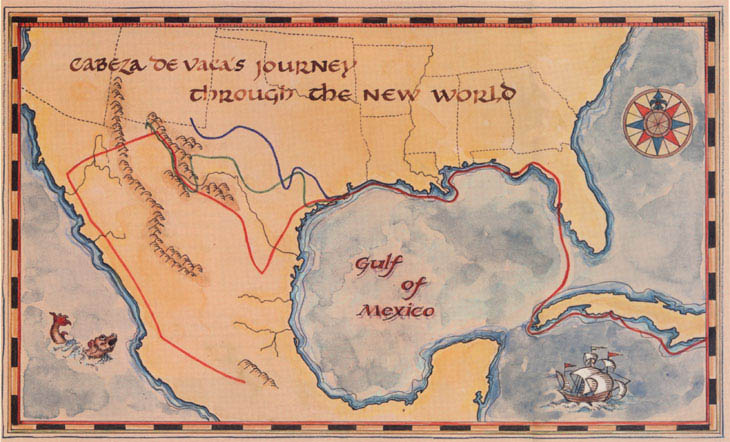
Alvar Nunez Cabeza de Vaca


"The inhabitants of all these parts go naked, except that the women cover some part of their persons with a wool that grows on trees, and damsels dress in deerskin."

De Vaca describes a bit of the customs of the Malhado tribe.

After reading the letters of Columbus, which seemed rather self-centered, it was refreshing to read de Vaca's accounts of the Native people he interacted with. Columbus doesn't provide much insight, if any, on the customs of the tribes, and if he did, it would likely be an unappealing misrepresentation. In Loewen, I read that Columbus does present them as intelligent and handsome, at first... but later as stupid savages. I don't recall reading the good part, though.

I'm repeating myself here, but I just can't believe how "in the dark" I've been all these years... and how SO MANY Americans are. It bothers me a little, that I never questioned the things I was learning. I wish I'd had a stronger mind to do so, and that I had influences around me that would've better challenged my thinking.

I always knew I liked to write... I always knew I liked to read... I never much liked History as a subject in school, but when it's presented to me in such a rich and effective (and true) manner as it is through American Literature, I'm absolutely fascinated by it! I've even decided to take a class called "War And Peace" next semester at SJSU, when in the past, I would've had no interest in any kind of "Political Science" class. It seems I'm finally growing up... just as America needs to do. I wonder if the country will ever have the educational revolution it needs in order to begin respecting the contributions of ALL cultures... and to begin telling the truth about our History.

I don't think Loewen mentions de Vaca, at least not in chapter 2, but he does explain so many things about Native Americans and their misrepresentation, along with the misrepresentation of all other cultures, and the glorifying of the white man, and Europeans. Loewen includes in his book the following quote by Samuel D. Marble, also found on this Facebook page:

"As subject for research, the possibility of African discovery of America has never been a tempting one for American historians. In a sense, we choose our own history, or more accurately, we select those vistas of history for our examinations which promise us the greatest satisfaction, and we have had little appetite to explore the possibility that our founding father was a black man."

Although the quote is in reference to blacks, it pretty much sums up the whole idea behind our falsely represented American History, and I hope this phenomenon will continue to change.

Thursday, December 03, 2009

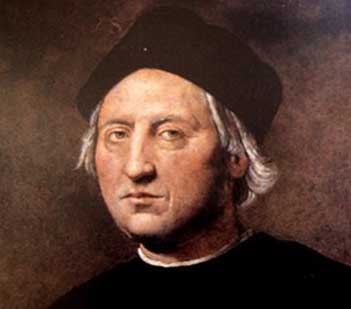
Christopher Columbus


"There I found very many islands, filled with innumerable people, and I have taken possession of them all for their Highnesses, done by proclamation and with the royal standard unfurled, and no opposition was offered to me."

In the beginning of a
Letter to Luis de Santangel Regarding the First Voyage, Christopher Columbus declares that he has taken control of the people and land he has found. The letter was written in 1493.

I remember hearing all about Christopher Columbus as a kid. He was who we were told "discovered America," and I never had any reason to question it. I figured teachers wouldn't lie... and
textbooks sure wouldn't lie. Besides, it seemed like common knowledge that Columbus "sailed the ocean blue in 1492." The funny thing is that I suppose there was always something missing... little pieces that just didn't add up, but just like I was expected not to question the story of God and Jesus, it seemed understood that we should also never question our history books. See, although I'm guilty of never asking about it, I always kinda figured America was just a bunch of empty, unpopulated land. Sure, I had hear about the Indians, but I guess I figured white people and Indians just kinda "started existing" at the same time. And I never really thought about black people... They must've just appeared in America one day... Poof! And then there was slavery and racism. And of course, Indians were crazy & violent, and white men were all cowboys. And Thanksgiving was a happy little gathering of friendly pilgrims and Indians, blah, blah, blah.

Part of me feels a little guilty for not questioning these things earlier, but like I said, I had no reason to. The thing I notice these days is the fact that I'm gaining all this incredible eye-opening knowledge, while the people around me sit still... happily stewing in their own ignorance with eyes glazed over whenever I mention an inkling of what I'm learning. Friends, family, and co-workers pause and flash a confused smile when I tell them that our history books got so many things wrong. Most people just dismiss what I'm saying and assume I'm becoming some kind of scholarly snob. Others sometimes nod as if they agree with me and know what I'm talking about, but I can tell they don't. And of course SOME of them actually do know what I mean, and they DO agree with me...

Reading Loewen... and all of this amazing literature is refreshing because it makes so many things make so much more sense. I might not like all the reasons for things, but at least there are explanations instead of an expectation that everything's fine the way it is and shouldn't be questioned. As I learn things, I wish I could make everyone else learn too... and it becomes harder and harder to have intelligent conversations with some of the people in my life.


I'm so glad that at least Dave (my fiancée) is so smart and liberal.

Tuesday, November 24, 2009

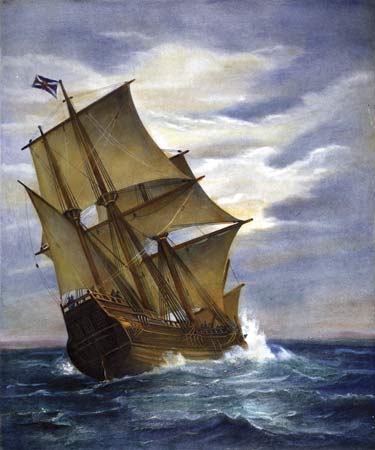
William Bradford: Of Plymouth Plantation


"But the Lord is never wanting unto his in their greatest needs; let his holy name have all the praise."


Bradford writes of the treacherous journey from England and the landing of the Mayflower on American land... Of all the things that went wrong, it's amazing they survived at all, and he attributes this to divine intervention.

There are several parts in Bradford's writing in which he gives thanks to God for helping the crew of the Mayflower. He thanks God for sparing the lives of the Puritans, for striking a bad ("lusty") man with a deadly disease, for providing them with the Indians' food and later the help of the surviving Indians, etc. While one might say it MUST have been divine intervention that kept them alive, it's kinda funny how that belief system can be employed no matter WHAT happens. When misfortune befalls one of the good people, it must just be that the good person is either being tested, or being chosen to go to heaven.

Although I'm a skeptic on all of this, I've gotta give it to them for holding onto a belief system strong enough to give them the will to endure such horrible conditions. I think I would've thrown myself overboard, rather than go through what they did (like Bradford's wife did, from what I hear).

I continue to believe that religion has its place... and that for some, perhaps it's necessary. The sense of purpose, community, and peace it brings to those who follow it, I suppose, is a good thing. Even if it IS a bunch of fairy tales and magic, it CAN be a good thing, unless it's abused the way it often is, and used to start wars. I guess I'm generalizing a little, and rambling a lot.
I used to truly believe in God... In fact, it took me years to stop believing, and more years to admit it to anyone. Around the age of 11 or 12, I walked through the dark woods near the bible camp I went to, reciting Isiah 41:10, "Fear thou not, for I am with thee. Yea, I will help thee." That's what got me past the fear of dark woods... I really believed God would protect me from the unknown. Hmm... Funny I still remember that verse... and a few others.

Thursday, November 19, 2009

Anne Bradstreet: Poems & such

"If ever two were one, then surely we/ If ever man were loved by wife, then thee/ If ever wife was happy in a man/ Compare with me, ye women, if you can"

These are the first few lines of a poem written by Anne Bradstreet, to her husband, in the late 1600s.

While I've enjoyed reading most of Bradstreet's poetry, those sweet lines will stay with me for a while, I think. I even found myself repeating them to my fiancée. That's the girly romantic in me, I suppose.

What's most striking about Bradstreet's poetry is the personal nature of it... The things she wrote about are things that, in a sense, carry over into the modern world. Maybe not all of it, but some. I guess when I picture "Puritans" I don't think of people feeling deeply about things such as this. I'm not sure why I felt that way, since they were people, after all. Maybe I just didn't expect that she would've expressed these feelings, or that she would've been allowed to.
Misty Jones says in Norms and Criticism in Anne Bradstreet's Poetry that her poetry "depicts and respects Puritan standards and expectations, but it also includes discussions of ideas contrary to these standards."
I guess that's putting it exactly the way I might put it, if I were to try to explain Bradstreet. It's quite refreshing, actually. I think she might be one of my new favorites.

Tuesday, November 17, 2009

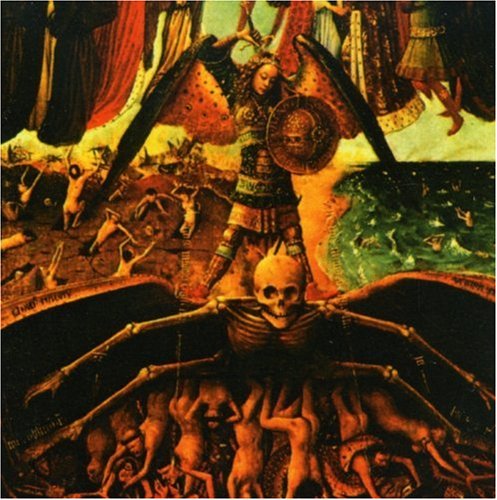
Jonathan Edwards: Sinners in the Hands of an Angry God

"... your guilt in the meantime is constantly increasing, and you are every day treasuring up more wrath; the waters are constantly rising, and waxing more and more mighty...

The quote is from a sermon delivered by Jonathan Edwards in 1741, "Sinners in the Hands of an Angry God." Edwards describes what he believes will happen to non-believers as they go on living... that the longer they are allowed by God to live on the earth, the worse it will be in the end when they burn in hell for all the sins they've piled up.

Christianity is fascinating, really... Fascinating from the standpoint of an non-believing observer, just as one might be fascinated by the behavior of a foreign species in its environment. We look on in awe, and can't quite get over the actions of the odd species. We can't quite fathom why in the world they do the peculiar things they do, and we shake our heads in amazement. As an onlooker to Christianity, especially the kind displayed in the Edwards sermon, I'm baffled by the degree of deep belief in something that sounds so utterly absurd to me.

In this article, G K Fralin states,
"Jonathan Edward’s sermon “Sinners in the Hands of an Angry God” is such a beautifully and eloquently spoken sermon of love that many will likely see only as a sermon of God’s displeasure with man."
It's hard NOT to see it that way, since the sermon is repetitively packed with metaphors describing how angry and poweful God is, and how at any minute he can choose to cast us down into Hell. But I'm sure there's more to Edwards than that. It seems he was a brilliant man.

I can't help thinking of my childhood. There was a time when I believed... There were several times when I believed, then didn't, then did... It was all very confusing, and I struggled with the shameful things I did in private, thinking that God and my dead grandmother were up there looking down on me from Heaven, shaking their heads in disgust at the naughty things I instinctively chose to do. I was sure that if I ever made it up there, I'd be ashamed about everything they saw me do my whole life, so maybe it was better to go to Hell instead... less pressure.

At bible camp, I met a handsome kid that I'd write letters to, and anticipate the next time I got to see him. We were 15, and we said we were in love. I'll call him John, but his name was even more biblical than that... He was the son of a preacher. We usually did nothing more than hold hands, but on our way back from the campfire one night, we snuck off to the woods, where we passionately made out. In a brief moment of hot, hazy lust that could've only been brought on by the Devil himself, "John" touched my breasts. It was over in ten seconds, and I wasn't too torn up about it. Long story made a little shorter, he finds me on Facebook years later. We're both over 30, and I haven't talked to him since about age 16, and he writes a LONG apology about the way he "lost control" that night in the woods. He's so sorry that he was so misguided, and it bothers him
still to this day. He's a preacher himself now, I believe... or at least an incredibly devout Christian. I wanted to respond with something sarcastic about how it had ruined me, and I'm still trying to work it out in therapy, but I'm not that cruel. Instead, I explained to him that after so many years, we have our own very different memories about what happened in the woods. I told him my memory of it was sweet, and that I was sorry his wasn't... and that if he needed me to "forgive" him, I was happy to, but that there was no harm done, as far as I was concerned.
My point, I guess, is that some people really believe in this shit... immensely. And it's baffling to a former Christian, reformed non-believer.

Monday, November 09, 2009

Thomas Paine: Common Sense


"A long habit of not thinking a thing wrong gives it a superficial appearance of being right, and raises at first a formidable outcry in defence of custom."

Thomas Paine writes this line in the introduction of
Common Sense, a pamphlet urging immediate independence from Britain.

I'm not sure if I'm reading it the way it was meant to be written, but if I'm not mistaken, it means that people get in the habit of believing in something...
anything... and end up believing it just because it's what they've always believed. If one were to ask them why they believe the way they do, they would have no good reason, except that it's just the way it's always been done. It's just what they know. Their answer to the question "Why?" would be "Just because." And if this is what Paine was in fact trying to say, then A-fricken-MEN! heheh.

What I mean is: So many people really DO go on believing and acting as they've always done,
just because it's the way they've seen it done and been taught to do. These people will even often fight to the death defending an ideal that they can't quite explain, just because it's what they think they're supposed to believe in. Would you call that tradition? Maybe.

Paine was said to have been a brilliant man, if I recall correctly, and an introductory statement like the one above is a great example of his ability at least to read human nature... his instincts, I suppose. He anticipated what the general reaction would be to
Common Sense and he asked that readers open their minds instead.

Craig Nelson said, in an article in The New England Review ,that Paine "believed in cultivating an elegant and stylish simplicity as an outward manifestation of republican ideals" (Nelson said this in regard to both Paine and Benjamin Franklin, in fact). I take this, and many other things I've read on Paine, to mean that he was an incredibly clever man, and if I knew him today, he'd be one of those people by whom I'd be impressed, but would be afraid to say anything foolish in front of, for fear that he'd ridicule me with a sharp retort. Hmm... I wonder if this is an accurate presumption on my part. And Hmm... I wonder what kind of "common sense" he'd plead of today, if he were alive to do so. And would people listen?