Olaudah Equiano: Narrative of the Life
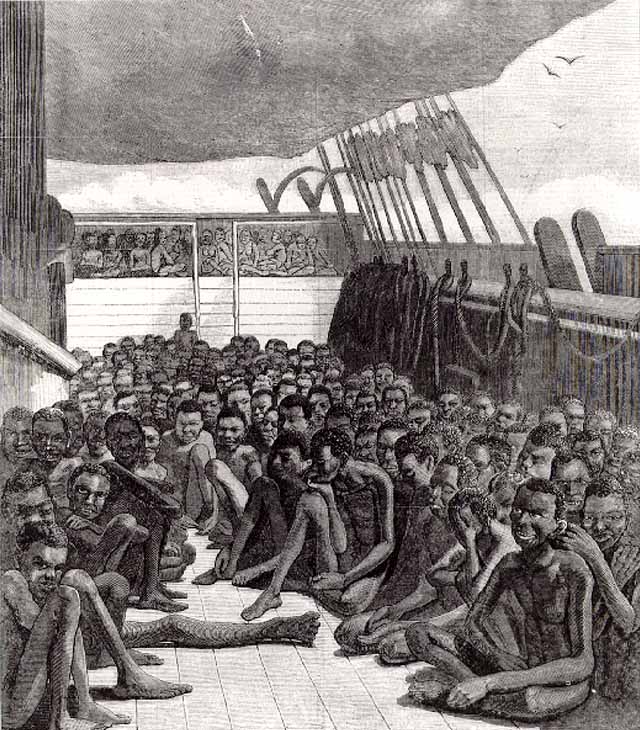
 "... the air soon became unfit for respiration, from a variety of loathsome smells, and brought on a sickness among the slaves, of which many died... and the filth of the necessary tubs, into which the children often fell, and were almost suffocated."
Equiano is describing the terribly wretched conditions of the imprisoned slaves' quarters on the ships he spent time on in The Interesting Narrative of the Life of Olaudah Equiano, or Gustavas Vassa, the African, Written by Himself.
This is yet another piece of literature that points out the inhumane treatment of human beings... It's another account that leaves me baffled at how anyone could ever let any human-- any animal even-- be subjected to such conditions. How could a whole race of people not be outraged by such a thing, and how in the world could it have gone on for so long? It makes me wonder how much this and other writings like it actually affected people of the time it was published. These writings are said to have made quite an impact on many people, but why not ALL people? Or is it that not enough people actually read it? Am I an idealist to think that people are inherently better than this? Even if it were only the people on the ships who let this treatment take place, what is it that drives a person to be so horrible toward hoards of fellow human beings? I suppose even those who were outraged by the thought of such actions may have felt too distant from the situation to do anything about it, or powerless to do anything about it, just as people feel today about controversial issues.
At any rate, these important pieces of African writing are my window into an issue I had never paid considerable attention to before I began taking American Literature classes. I'm repeating myself here by saying this: I have learned 100 times more about history through the study of its writers than I ever could've learned in a history book. W.E.B. DuBois himself pointed out that Equiano's autobiography is “the beginning of that long series of personal appeals of which Booker T. Washington's Up from Slavery is the latest.” (One source of this info can be found by clicking here.) No doubt, many later African American authors were influenced by Equiano. Even if he wasn't African American himself, he shared the same terrible experiences, and shared them with the world in the same manner, as an attempt to alert readers about how these unfortunate people were being treated.
posted by Tara Taylor at 4:17 PM


1 Comments:
20 points. "These writings are said to have made quite an impact on many people, but why not ALL people?" Good question. No answer.
Post a Comment
<< Home