Tuesday, November 24, 2009

William Bradford: Of Plymouth Plantation
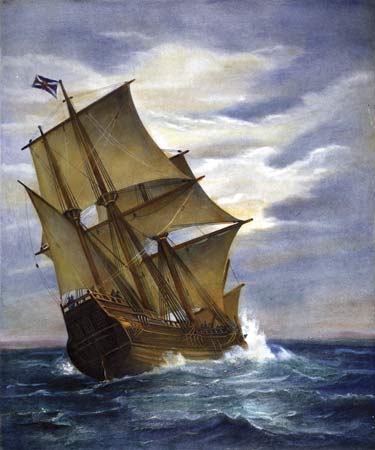

"But the Lord is never wanting unto his in their greatest needs; let his holy name have all the praise."


Bradford writes of the treacherous journey from England and the landing of the Mayflower on American land... Of all the things that went wrong, it's amazing they survived at all, and he attributes this to divine intervention.

There are several parts in Bradford's writing in which he gives thanks to God for helping the crew of the Mayflower. He thanks God for sparing the lives of the Puritans, for striking a bad ("lusty") man with a deadly disease, for providing them with the Indians' food and later the help of the surviving Indians, etc. While one might say it MUST have been divine intervention that kept them alive, it's kinda funny how that belief system can be employed no matter WHAT happens. When misfortune befalls one of the good people, it must just be that the good person is either being tested, or being chosen to go to heaven.

Although I'm a skeptic on all of this, I've gotta give it to them for holding onto a belief system strong enough to give them the will to endure such horrible conditions. I think I would've thrown myself overboard, rather than go through what they did (like Bradford's wife did, from what I hear).

I continue to believe that religion has its place... and that for some, perhaps it's necessary. The sense of purpose, community, and peace it brings to those who follow it, I suppose, is a good thing. Even if it IS a bunch of fairy tales and magic, it CAN be a good thing, unless it's abused the way it often is, and used to start wars. I guess I'm generalizing a little, and rambling a lot.
I used to truly believe in God... In fact, it took me years to stop believing, and more years to admit it to anyone. Around the age of 11 or 12, I walked through the dark woods near the bible camp I went to, reciting Isiah 41:10, "Fear thou not, for I am with thee. Yea, I will help thee." That's what got me past the fear of dark woods... I really believed God would protect me from the unknown. Hmm... Funny I still remember that verse... and a few others.

Thursday, November 19, 2009

Anne Bradstreet: Poems & such

"If ever two were one, then surely we/ If ever man were loved by wife, then thee/ If ever wife was happy in a man/ Compare with me, ye women, if you can"

These are the first few lines of a poem written by Anne Bradstreet, to her husband, in the late 1600s.

While I've enjoyed reading most of Bradstreet's poetry, those sweet lines will stay with me for a while, I think. I even found myself repeating them to my fiancée. That's the girly romantic in me, I suppose.

What's most striking about Bradstreet's poetry is the personal nature of it... The things she wrote about are things that, in a sense, carry over into the modern world. Maybe not all of it, but some. I guess when I picture "Puritans" I don't think of people feeling deeply about things such as this. I'm not sure why I felt that way, since they were people, after all. Maybe I just didn't expect that she would've expressed these feelings, or that she would've been allowed to.
Misty Jones says in Norms and Criticism in Anne Bradstreet's Poetry that her poetry "depicts and respects Puritan standards and expectations, but it also includes discussions of ideas contrary to these standards."
I guess that's putting it exactly the way I might put it, if I were to try to explain Bradstreet. It's quite refreshing, actually. I think she might be one of my new favorites.

Tuesday, November 17, 2009

Jonathan Edwards: Sinners in the Hands of an Angry God

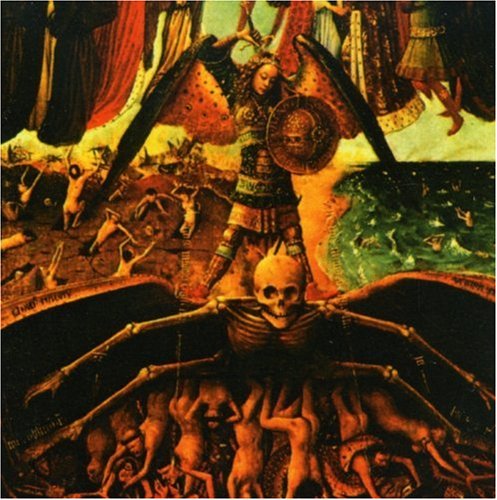
"... your guilt in the meantime is constantly increasing, and you are every day treasuring up more wrath; the waters are constantly rising, and waxing more and more mighty...

The quote is from a sermon delivered by Jonathan Edwards in 1741, "Sinners in the Hands of an Angry God." Edwards describes what he believes will happen to non-believers as they go on living... that the longer they are allowed by God to live on the earth, the worse it will be in the end when they burn in hell for all the sins they've piled up.

Christianity is fascinating, really... Fascinating from the standpoint of an non-believing observer, just as one might be fascinated by the behavior of a foreign species in its environment. We look on in awe, and can't quite get over the actions of the odd species. We can't quite fathom why in the world they do the peculiar things they do, and we shake our heads in amazement. As an onlooker to Christianity, especially the kind displayed in the Edwards sermon, I'm baffled by the degree of deep belief in something that sounds so utterly absurd to me.

In this article, G K Fralin states,
"Jonathan Edward’s sermon “Sinners in the Hands of an Angry God” is such a beautifully and eloquently spoken sermon of love that many will likely see only as a sermon of God’s displeasure with man."
It's hard NOT to see it that way, since the sermon is repetitively packed with metaphors describing how angry and poweful God is, and how at any minute he can choose to cast us down into Hell. But I'm sure there's more to Edwards than that. It seems he was a brilliant man.

I can't help thinking of my childhood. There was a time when I believed... There were several times when I believed, then didn't, then did... It was all very confusing, and I struggled with the shameful things I did in private, thinking that God and my dead grandmother were up there looking down on me from Heaven, shaking their heads in disgust at the naughty things I instinctively chose to do. I was sure that if I ever made it up there, I'd be ashamed about everything they saw me do my whole life, so maybe it was better to go to Hell instead... less pressure.

At bible camp, I met a handsome kid that I'd write letters to, and anticipate the next time I got to see him. We were 15, and we said we were in love. I'll call him John, but his name was even more biblical than that... He was the son of a preacher. We usually did nothing more than hold hands, but on our way back from the campfire one night, we snuck off to the woods, where we passionately made out. In a brief moment of hot, hazy lust that could've only been brought on by the Devil himself, "John" touched my breasts. It was over in ten seconds, and I wasn't too torn up about it. Long story made a little shorter, he finds me on Facebook years later. We're both over 30, and I haven't talked to him since about age 16, and he writes a LONG apology about the way he "lost control" that night in the woods. He's so sorry that he was so misguided, and it bothers him
still to this day. He's a preacher himself now, I believe... or at least an incredibly devout Christian. I wanted to respond with something sarcastic about how it had ruined me, and I'm still trying to work it out in therapy, but I'm not that cruel. Instead, I explained to him that after so many years, we have our own very different memories about what happened in the woods. I told him my memory of it was sweet, and that I was sorry his wasn't... and that if he needed me to "forgive" him, I was happy to, but that there was no harm done, as far as I was concerned.
My point, I guess, is that some people really believe in this shit... immensely. And it's baffling to a former Christian, reformed non-believer.

Monday, November 09, 2009

Thomas Paine: Common Sense


"A long habit of not thinking a thing wrong gives it a superficial appearance of being right, and raises at first a formidable outcry in defence of custom."

Thomas Paine writes this line in the introduction of
Common Sense, a pamphlet urging immediate independence from Britain.

I'm not sure if I'm reading it the way it was meant to be written, but if I'm not mistaken, it means that people get in the habit of believing in something...
anything... and end up believing it just because it's what they've always believed. If one were to ask them why they believe the way they do, they would have no good reason, except that it's just the way it's always been done. It's just what they know. Their answer to the question "Why?" would be "Just because." And if this is what Paine was in fact trying to say, then A-fricken-MEN! heheh.

What I mean is: So many people really DO go on believing and acting as they've always done,
just because it's the way they've seen it done and been taught to do. These people will even often fight to the death defending an ideal that they can't quite explain, just because it's what they think they're supposed to believe in. Would you call that tradition? Maybe.

Paine was said to have been a brilliant man, if I recall correctly, and an introductory statement like the one above is a great example of his ability at least to read human nature... his instincts, I suppose. He anticipated what the general reaction would be to
Common Sense and he asked that readers open their minds instead.

Craig Nelson said, in an article in The New England Review ,that Paine "believed in cultivating an elegant and stylish simplicity as an outward manifestation of republican ideals" (Nelson said this in regard to both Paine and Benjamin Franklin, in fact). I take this, and many other things I've read on Paine, to mean that he was an incredibly clever man, and if I knew him today, he'd be one of those people by whom I'd be impressed, but would be afraid to say anything foolish in front of, for fear that he'd ridicule me with a sharp retort. Hmm... I wonder if this is an accurate presumption on my part. And Hmm... I wonder what kind of "common sense" he'd plead of today, if he were alive to do so. And would people listen?


Thursday, November 05, 2009

Phillis Wheatley: Poems


"Let sin, that baneful evil to the soul/By you be shunned, nor once remit your guard/Suppress the deadly serpent in its egg/Ye blooming plants of human race divine/An Ethiop tells you ‘tis your greatest foe/Its transient sweetness turns to endless pain/And immense perdition sinks the soul."

These are the last seven lines of Phillis Wheatley's "To the University of Cambridge, in New England," a poem written in 1773. In the poem, the author is speaking to students about the importance of being a good Christian so that he may go to heaven.

I embarked upon the reading of Wheatley with an expectation of heavy abolitionist content, but I was mistaken. What I found instead in the selected readings was heavily RELIGIOUS content. In fact, every poem was loaded with projections of Wheatley's apparent pious character. As a non-Christian, I was quickly put off by the subject matter, but as an English major, I knew I must persist, and find a deeper appreciation for this trailblazing author, who was the first published African American writer, as well as the first published
woman writer. I wonder if she knew how important she would become? She seemed to know the impact of words, or she wouldn't have boldly written to such prominent figures as George Washington... I wonder what her real intentions were. Did she wish to show the English that a black woman had the capacity to be an intellectual equal to the whites? It certainly seems so, according to some of the messages in her poetry, and in the fact that she chose audiences like Washington himself, or the students of such a prominent university.

Critic Robert Kendrick states that in Wheatley, the reader is presented with "a private, classical, subversive poet, on the one hand, and a public, Christian, assimilationist writer, on the other - two vastly different "Wheatleys" constructed within the same volume with competing agendas." I suppose I realized this as I explored further than the assigned readings and read some of the other poems in the Norton Anthology, but I still expected to find more of an abolitionist stance. I suppose at the time, it may have been impossible for her to burst onto the all-white literary scene with such a blatant message, so perhaps she held back. Perhaps on closer reading, I might find more clever, hidden messages in the lines that at first seemed benign.


Tuesday, November 03, 2009

Olaudah Equiano: Narrative of the Life


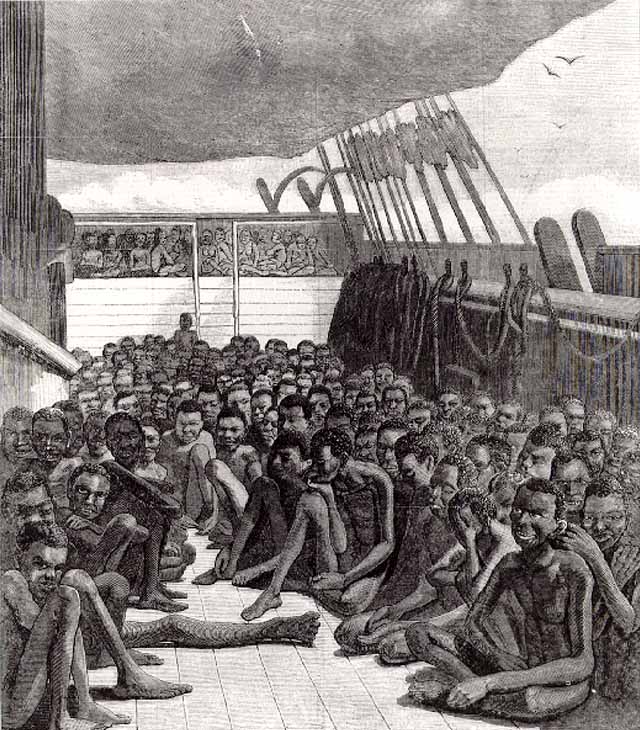
"... the air soon became unfit for respiration, from a variety of loathsome smells, and brought on a sickness among the slaves, of which many died... and the filth of the necessary tubs, into which the children often fell, and were almost suffocated."

Equiano is describing the terribly wretched conditions of the imprisoned slaves' quarters on the ships he spent time on in
The Interesting Narrative of the Life of Olaudah Equiano, or Gustavas Vassa, the African, Written by Himself.

This is yet another piece of literature that points out the inhumane treatment of human beings... It's another account that leaves me baffled at how anyone could
ever let any human-- any animal even-- be subjected to such conditions. How could a whole race of people not be outraged by such a thing, and how in the world could it have gone on for so long? It makes me wonder how much this and other writings like it actually affected people of the time it was published. These writings are said to have made quite an impact on many people, but why not ALL people? Or is it that not enough people actually read it? Am I an idealist to think that people are inherently better than this? Even if it were only the people on the ships who let this treatment take place, what is it that drives a person to be so horrible toward hoards of fellow human beings? I suppose even those who were outraged by the thought of such actions may have felt too distant from the situation to do anything about it, or powerless to do anything about it, just as people feel today about controversial issues.

At any rate, these important pieces of African writing are my window into an issue I had never paid considerable attention to before I began taking American Literature classes. I'm repeating myself here by saying this: I have learned 100 times more about history through the study of its writers than I ever could've learned in a history book. W.E.B. DuBois himself pointed out that Equiano's autobiography is “the beginning of that long series of personal appeals of which Booker T. Washington's
Up from Slavery is the latest.” (One source of this info can be found by clicking here.) No doubt, many later African American authors were influenced by Equiano. Even if he wasn't African American himself, he shared the same terrible experiences, and shared them with the world in the same manner, as an attempt to alert readers about how these unfortunate people were being treated.