Thursday, January 29, 2009

Journal #8: Sui Sin Far


"Ah, how could I close my eyes with my arms empty of the little body that has filled them every night for more than twenty moons?"


Lae Choo, a character in Sui Sin Far's
In the Land of the Free, is a mother who longs to have her baby boy back in her arms. The child is taken from her and her husband by customs officers on their arrival in the U.S. because there is no legal documentation of the child.

The story and situation is sad, but what struck me about the quote above is the idea of the baby boy sleeping in his mother's bed every night. It got me to thinking about whether it may have been out of necessity where she was staying at the time, or if it was something else. Since it is not something that I knew to be a common practice in Western cultures, I looked it up. I found a few things on various websites, but the basics are here at Wikipedia:

http://en.wikipedia.org/wiki/Co-sleeping

Apparently, some people in the United States have more widely adopted this practice, which has been named "co-sleeping." It is common in Asian countries and other various regions. Upon first impression, I would have assumed it was a bad habit that would be difficult to break when the time came, and that it would lead to psychological attachment issues for the children and their parents. I could be wrong though. There seem to be advantages to the practice, such as comfort in place of controversial items such as pacifiers and security blankets. Also, it allows the mother more likely sleep without much interruption at night and could make breast-feeding easier.
Anyway, it just got me to wondering about the differences in the ways that each culture raises their children. I work at a children's hospital, and sometimes it's difficult not to develop stereotypes where parenting is concerned. One ethnicity or race may seem as though their parenting is excessively "doting" and over-protective, while other cultures of parents seem to let their children run "free." I've always found it interesting that the children with more general freedom seem to be more well behaved than the former, and are more likely to trust me and the other healthcare professionals.
Interesting subject indeed. It's worth looking deeper into!
This blog didn't cover much about the reading or about Sui Sin Far (Edith Maud Eaton). I hope that's okay.

Journal #7: Abraham Cahan

"Flora hated the notion of marrying as the other Mott or Bayard Street girls did. She was accustomed to use her surroundings for a background, throwing her own personality into high relief. But apart from this, she craved a more refined atmosphere than her own, and the vague ideal she had was an educated American gentleman, like those who lived uptown."


In The Imported Bridegroom, Cahan depicts a Jewish American young woman and her father, living in New York. The father, Asriel Stroon, has begun to revert back to his Orthodox Jewish beliefs as he grows older and starts to fear that he has not lived as a good man. Part of his return to tradition is his desire for his daughter to marry a a Jewish man, in hopes that the man can mourn Asriel in death the way it is believed he should properly be mourned, and perhaps to also take care of his daughter. But Flora has other plans. She wishes to marry an American (Jewish) doctor, and she has an underdeveloped view of what her life would be like. She is heavily concerned with appearances and status, and thinks that she will fulfill these by living happily ever after as a doctor's wife.

At first, I liked Flora... I figured Cahan's might be a story of a strong-willed young woman at odds with her old-fashioned Jewish father (which she was), and that they would come to an understanding (or not) on some middle ground about marriage and the early vs. modern ideas of it. The reader does not get a large literal perception of Flora before Cahan shifts to Asriel and his trip to Pravly. I say literal, because after a discussion in class about the opening paragraphs, I realized there was so much that I hadn't picked up on in Flora's character. For example, I took from the first few paragraphs that she simply liked to read... and I was impressed by this. After discussing it deeper in class, I realized that I missed the point: that there was an air of pretension and fantasy in the first scenes of Flora.


Later, Flora turns out to be a person who finds a way to spin things to her anticipated advantage by manipulating Shaya into becoming what she wants him to be. I still didn't quite think ill of her, since Shaya was inclined to learn, and seemed content with the situation. And I liked the idea of them falling in love (call me a ridiculous romantic), but I admit that I hoped for a happy ending then, in which they eventually reveal their scheme to Asriel, and although it takes time, he gets over their deception and everyone lives happily ever after as an "Americanized" family, in which case, the characters would have all been somewhat changed at the end, and maybe for the better.
I'm wondering if I should feel a little ashamed of my initial response to the reading... It seems like there were so many details I missed in the beginning, and should I try harder not to expect happy endings? I realize that life is not about happy endings, and neither is literature...
My lack of an initial deeper understanding of Flora makes me think I have a lot to learn about interpretation, but I guess that's why I'm in college. I feel as if I was duped by the happy image of her sitting in the "boudoir" with her book. She ends up being spoiled and naive, which I surely can not judge her for, but maybe I should've seen it coming?

Thursday, January 22, 2009

Journal #6: Zitkala Sa (Gertrude Simmons Bonnin)


"I was a wild little girl of seven. Loosely clad in a slip of brown buckskin, and light-footed with a pair of soft moccasins on my feet, I was as free as the wind that blew my hair, and no less spirited than a bounding deer. These were my mother's pride, -- my wild freedom and overflowing spirits. She taught me no fear save that of intruding myself upon others.
"


In Impressions of an Indian Childhood, Zitkala Sa beautifully crafts the images of her youth as a Sioux Indian on the verge of major transition, but so far, unaware. Although the whole story is rich with exquisite language, this particular passage is one of my favorites. The author makes it so easy for the reader to "see" the little girl, wild with beauty. The passage says so much about her as a child, about her mother and their relationship, and about the spirit of a Native American child before unfortunate "detribalization."

The story is an autobiographical account of Zitkala Sa and her struggle with the white man as he forces her to comform to a life like that of white children. She is resistant, and describes the desirable life she left behind, which she was lured away from by the empty promises of the white missionaries.
What strikes me most about Impressions of an Indian Childhood is the wonderful imagery! I can't get over how lost I was able to get in her scenery, and she accomplishes this in an uncomplicated way. She was a master of simplistic but effective metaphor, and there is such an impressive flow in her language and form. I think I'm overdoing it now... My point has been made. ;-)

Tuesday, January 20, 2009

Journal #5: Sarah Winnemucca

"Every night I imagined I could see the thing called President. He had long ears, he had big eyes and long legs, and a head like a bull-frog or something like that. I could not think of anything that could be so inhuman as to do such a thing,—send people across mountains with snow so deep"


Sarah Winnemucca, in her account of her life as a young Native American woman, recalls her thoughts during the Yakima Affair, in which the white man ordered her tribe, the Piutes, to migrate to the Yakima Reservation in Washington. It was the middle of winter, and people would surely get sick and/or die in transit, but they were forced out anyway.
The language and style used in
Life Among the Piutes is somewhat simple and conversational. Winnemucca's story is told in a way that would be easy to understand, and in an autobiographical manner. The writings are said to be taken from her lectures, aimed at the American white man, pleading that her people be treated with kindness and compassion. She is attempting to dispel Indian stereotypes and myths about their believed "savagery."

I'm at a bit of a loss for words... When I read about the way the "white man" has treated anyone of a different skin color or origin throughout history, I just shake my head in disbelief. In history books and in pieces of literature such as this, along with the pieces I've read on African American mistreatment throughout the years, I can't help but ask this question: Who the hell did they think they were? Who the hell do they think they
are? How did it ever enter their mind to think that they must be better than any man that is different, and what gave them the idea that they could treat any person the way they've mistreated human beings of other races? I just don't get it. How far back does it go, this superiority complex? The white man has done whatever he damn well pleases... How did it start? How did it go on for so long? It makes me angry, and I'm sorry I'd been somewhat oblivious to it in the past.

I think about the way my mother always did so well at teaching my sister and me that we should have compassion for all people and animals... and that we should treat people the way we would like to be treated. We should not tease and ridicule anyone for their misfortunes or obscurities, or for anything. And the lesson stuck. I wonder where the mothers of these white men were, and where the mothers of many men today were, when they were children... Why didn't their mothers teach them the "golden rule" and if they did, why didn't it stick?

Thursday, January 15, 2009

Journal #4: W.E.B. Du Bois


"Then it dawned upon me with a certain suddenness that I was different from the others; or like, mayhap, in heart and life and longing, but shut out from their world by a vast veil.I had thereafter no desire to tear down that veil, to creep through; I held all beyond it in common contempt, and lived above it in a region of blue sky and great wandering shadows."


In The Souls of Black Folk (1903), Du Bois recalls the moment at which he realized a prejudice among races. It was during his grade school days, when a white girl that was new in town rejected a card he offered her.

When Du Bois says that he had "no desire to tear down that veil," at first I thought he was making a decision to submit to the prejudice... to accept defeat. But in the lines immediately following, I realized otherwise. He said he "lived above it in a region of blue sky and great wandering shadows." This was an indication that from then on, he felt enlightened, and better for his difference. You could say his eyes were opened, or that the fog had lifted, which would be ironic, since he speaks of discovering a "vast veil."

Although W.E. B. Du Bois and Booker T. Washington had some antithetic views on the issue of racism in America, they agreed that the strife of Black America was ultimately a source of strength... that white Americans were lacking in virtue for not having suffered in such a way. The views and methods of these two men have been argued, dissected, compared, and contrasted to death, but it's quite possible that niether of them was wrong, per se. Although some may contend that Washington's slant toward separatism was a weak stance, it is important to consider the differences between these two men and their respective platforms. It is crucial to recall that Washington came "up from slavery" in the literal sense, and that although Du Bois undoubtedly suffered racial hardships, there is a generational and economical gap to consider between the two, and although Du Bois sheds light on the "holes" in Washington's theories, he also gives due credit as he sees fit.


"So far as Mr. Washington preaches Thrift, Patience, and Industrial Training for the masses, we must hold up his hands and strive with him, rejoicing in his honors and glorying in the strength of this Joshua called of God and of man to lead the headless host."

Tuesday, January 13, 2009

Journal #3: Booker T. Washington

Tara Phillips
English 48B


Quote:

"In my contact with people I find that, as a rule, it is only the little, narrow people who live for themselves, who never read good books, who do not travel, who never open up their souls in a way to permit them to come into contact with other souls--with the great outside world. No man whose vision is bounded by colour can come into contact with what is highest and best in the world" (Norton, 684).

Summary:
In Up From Slavery, Booker T. Washington writes of his meeting with President Grover Cleveland, who he stated he did not believe was "conscious of possessing any colour prejudice," and that Cleveland was a great man. Washington follows his compliments of Cleveland with an elaboration on the subject, stating in short that prejudices are often borne of ignorance and "narrow" minds.

Reaction:
As I grow and change as a person, and watch people around me do the same (or not), I have to agree with Mr. Washington. Education, in the broadest sense of the word, plays a major role in the development of tolerance and understanding of one's society as well as societies outside of oneself. There is often an unmistakable and admirable sense of openness present in an educated individual. This is not to say that all people must attend prestigious colleges and earn degrees of the highest possible kind, or that those who do seek this kind of formal education are always the most kind and tolerable people in the world. Rather one should constantly seek improvement of himself and remain open to diversity at all times. Human beings should seek knowledge at all times. In order to function, the brain needs exercise just like the rest of the body does. The mind needs stimulation, rejuvenation, replenishment, and rest, just as any working mechanism does.
I agree that people who are filled with prejudice are truly lacking in virtue, and it is most likely because they have not ventured out, physically or intellectually. They are "narrow" people... one-dimensional.

Thursday, January 08, 2009

Journal #2: Charlotte Perkins Gilman

Tara Phillips
English 48B
Dr. Lankford


"I get unreasonably angry with John sometimes. I'm sure I never used to be so sensitive. I think it is due to this nervous condition."


Summary:


The woman in "The Yellow Wallpaper" states that she believes her anger at her husband is not warranted, and attributes it to the "nervous condition" she is told she has. In a sense, she is apologetic about her feelings toward him.


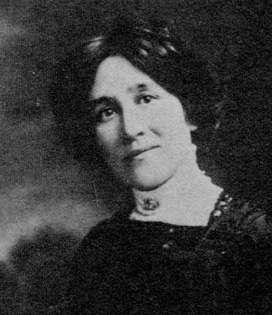
Interesting note: Gilman was about 32 when this story was published. I am 32 as I read it. I also moved to California from the east coast after my divorce, as did Gilman. (From left: Gilman, Phillips)


Reaction:


In my opinion, the woman in the story was not quite crazy to begin with, but was driven to insanity by being locked up in the room with the yellow wallpaper. She may have been on the verge, but I'm guessing that without the ridiculous prescribed "rest cure" she would've been just fine. What she needed was freedom... of thought, of speech, of self, which were hard for a woman to come by in the late 1800s to early 1900s. She had every reasonable right to be angry with her husband, but had been conditioned to believe otherwise, and conditioned to believe that if she acted on her instincts, she would be deemed hysterical.
The quote stood out for other reasons, though... It, and other such justifications in the story, reminded me of things I used to write in my own journal when I was a very young married woman, and did not think that my feelings of suffocation and my hunger for freedom were justified. Times have changed, of course. I was not locked up in a room with barred windows. I was technically free to come and go as I pleased, but I did feel like I must live the way my husband wanted me to live... In short, I gave in to his ideals and ignored my own, and slowly let myself become who I thought he wanted me to be.
I can't begin to imagine living as a woman in Gilman's time. I am grateful that when I found myself "trapped" in a life I didn't belong in, after careful consideration, I was free to walk away.


Wednesday, January 07, 2009

Journal # 1: Ambrose Bierce

Tara Phillips
English 48B
Dr. Lankford
January 7, 2009


"The man in the water saw the eye of the man on the bridge gazing into his own through the sights of the rifle. He observed that it was a gray eye and remembered having read that gray eyes were keenest, and that all famous marksmen had them. Nevertheless, this one had missed" (From An Occurrence at Owl Creek Bridge, Ambrose Bierce)


Summary:

The suggestion that the man in the water could see the eye color of the gunman from such a great distance is one of many indications of either a supernaturally heightened sense of sight, or merely a hint that the events of the man's survival are merely a delusion.

Reaction:


As I read, I hoped and believed that the man would somehow actually survive, and that he would return home to his family and somehow successfully live out the rest of his life in hiding. After all, one always hopes for a happy ending, and Bierce successfully demands sympathy for Peyton Farquhar by letting the reader in on his admirable human qualities, and never mentioning his actual crime. Sure, he alludes to it casually in the scene where he is asking the soldier about the possibility of a civilian getting "the better of the sentinel," but aside from that, the reader is led to believe that in some patriotic attempt to interfere with the North's reparations of the railroad, Farquhar was caught, and is being hanged for it.
There were many examples of the heightened senses vs. supernatural reactions that I mentioned above, such as the mere fact that a normal human body should not be able to endure the beating that Farquhar's did. he fell several feet, was strangled by a noose, if even for the short time before it supposedly broke, and he was under water for a long period of time. He was also unconscious for long enough, the reader would think, that he might have suffered a significant loss of oxygen to the brain and therefore brain damage. He was then eventually washed down the creek and tossed against rocks, but I suppose the creek was a "lazy" one and maybe he wasn't tossed so hard. It's also unlikely that all the shots fired would miss him, especially with the gray-eyed marksman shooting at him, and the cannon that was fired at him. One might think as he reads that there is some divine intervention. Maybe the bullets and cannons are missing him because a higher power is ensuring his survival, which again alludes to the supernatural.


Two sections of my mind played a tug of war with me as I continued to read An Occurrence. Although I hoped for "happily ever after," I had the nagging suspicion that it would not be so... In reading about "Bitter Bierce" and his overall cynicism on Wikipedia, I assumed that he did not produce a lot of happy endings, and that despite the struggles of Farquhar, he might not make it. The skeptic in me said that it was all too unreal, but the optimist let me keep hoping that Farquhar would make it, and that this would be a happy story. When it comes to literature, one can absolutely hope, but I conclude that Bierce was a realist.